
SUMP PUMP RESOURCE
Sump Pump Check Valve Problems
Practical information from Sump Pump Co to help you understand sump pump problems, repair options, water-management considerations, and what to confirm with an independent provider.
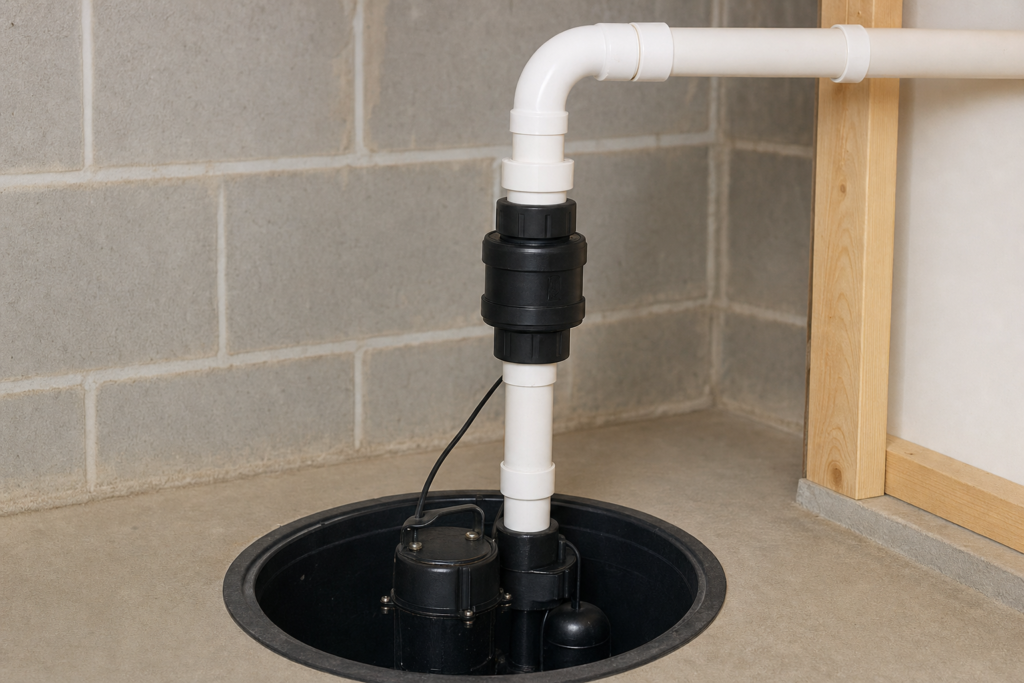
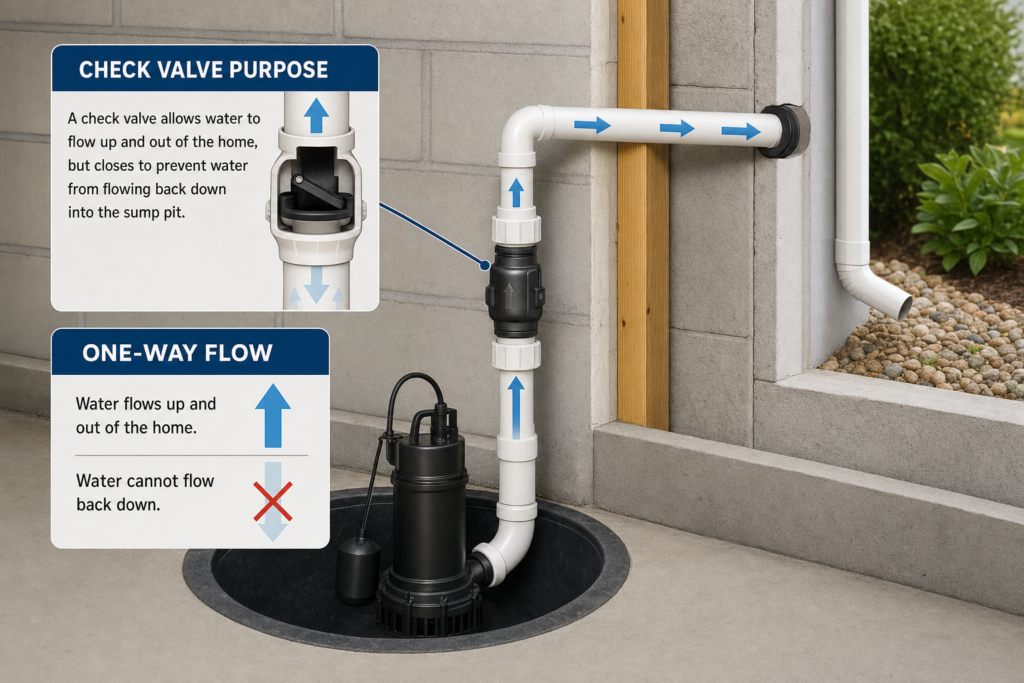
The check valve is a one-way valve in the discharge line that keeps water from flowing back into the sump pit after the pump shuts off. When it fails—whether stuck open, stuck closed, missing, or installed backward—you’ll typically notice water flowing back into the pit, the pump short-cycling, or a loud bang each time the pump shuts off.
Signs of a Failing Check Valve
- Water flowing back into the pit after the pump shuts off, visible as the water level rising again without the pump running.
- Short-cycling—the pump turning back on within seconds of shutting off, because backflowing water re-triggers the float switch. See Sump Pump Runs Constantly for more on this pattern.
- A loud bang or thud (water hammer) each time the pump shuts off, caused by the valve slamming shut against sudden flow reversal. See Sump Pump Making Noise for other noise causes.
- The pump running longer or more often than the amount of water entering the pit would suggest, since backflow adds to the volume the pump has to move.
Common Check Valve Problems
Valve Stuck Open
A valve stuck in the open position no longer blocks backflow, letting water in the discharge pipe drain straight back into the pit. This is often caused by debris lodged in the valve mechanism or a worn flapper/spring that no longer seals.
Valve Stuck Closed
Less common, but a valve stuck closed blocks the pump from discharging water at all, causing it to strain against a closed line. This can mimic a discharge line blockage; if the valve itself tests as functional when removed, the issue is more likely elsewhere in the line—see Sump Pump Discharge Line Problems.
Missing or Never Installed
Some older or DIY installations don’t include a check valve at all. Without one, water in the discharge pipe drains back into the pit every time the pump shuts off, causing frequent, unnecessary cycling even under normal water conditions.
Installed Backward
Check valves are directional, and installing one backward blocks the pump from discharging water in the correct direction. Most valves have an arrow molded into the housing indicating the direction of flow, which should point away from the pump toward the discharge exit.
Testing and Replacing the Valve
- Unplug the pump and run a flood test, watching the water level in the pit immediately after the pump shuts off.
- If the level rises without the pump running, water is flowing back through the valve.
- Locate the valve on the discharge pipe (usually just above the pump, before the pipe exits the wall or floor) and inspect it for correct orientation, cracks, or debris.
- Check valves are generally inexpensive, simple components to swap out compared to the pump itself, and replacement usually just involves cutting out the old valve section and installing a new one in the correct orientation.
When It Points to a Bigger Issue
A single failed check valve is usually an isolated, straightforward fix. If replacing it doesn’t resolve short-cycling or noise, the cause may be elsewhere in the float switch or discharge line—see Sump Pump Float Switch Problems or Sump Pump Discharge Line Problems. For general repair steps, see Sump Pump Repair.
For the full range of sump pump issues, see the Sump Pump Problems Guide.
Safety note: Keep hands and tools away from an energized sump pit. Disconnect power before touching the pump, float, check valve, piping connections, or other components. Do not work on electrical equipment in or near standing water.
Need Sump Pump Service Help?
Call to discuss your situation and confirm service options, pricing, scheduling, availability, and provider capabilities directly.
Referral Disclosure: Sump Pump Co is a referral-style informational website. We may help callers connect with independent service providers. We do not perform sump pump services ourselves. Pricing, availability, response times, warranties, provider capabilities, and service options may vary. Always confirm details directly before scheduling work.