
SUMP PUMP RESOURCE
How Do Sump Pumps Work
Practical information from Sump Pump Co to help you understand sump pump problems, repair options, water-management considerations, and what to confirm with an independent provider.
A sump pump sits in a pit (the “sump”) in your basement or crawl space and automatically removes groundwater before it can flood the space. As water collects in the pit, a float switch rises with the water level, triggers the pump’s motor, and the pump pushes the water out through a discharge pipe to a location away from the foundation. Once the water level drops, the switch resets and the pump shuts off.
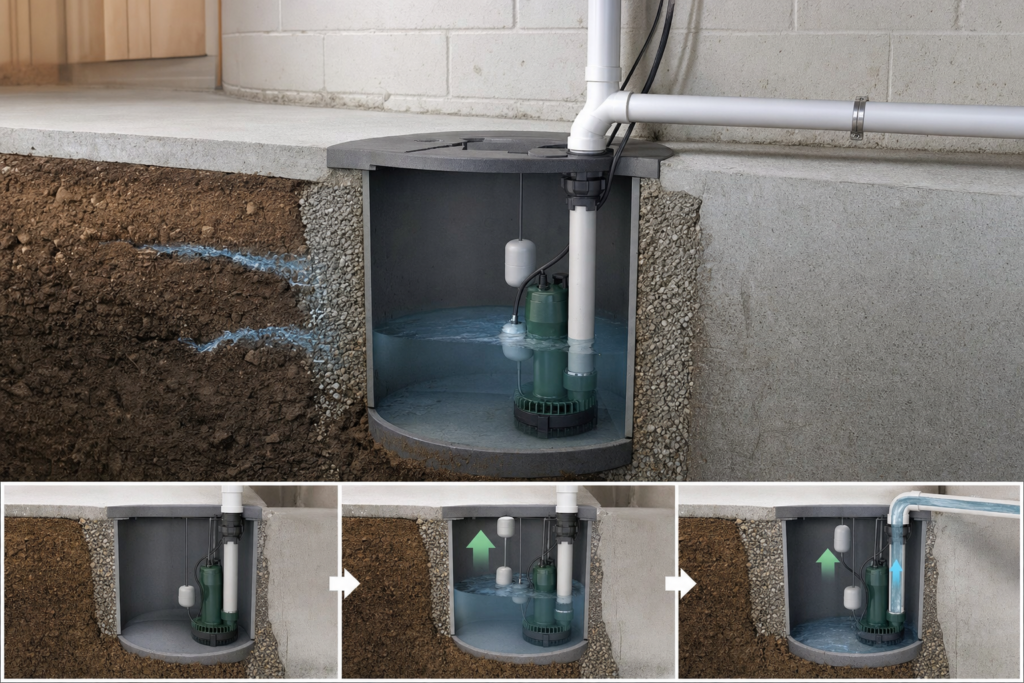
The Basic Components
- Sump pit (basin): A hole, usually lined with a plastic or concrete basin, dug into the lowest point of the basement or crawl space floor where groundwater naturally collects.
- Pump: The motorized unit that moves water out of the pit. It sits either submerged in the pit (submersible) or mounted above it (pedestal) — the differences between these designs are covered in Types of Sump Pumps.
- Float switch: A sensor that detects rising water and signals the pump to turn on, then signals it to turn off once the water level drops enough.
- Discharge pipe: The pipe that carries water away from the pump, routing it outside and away from the foundation so it doesn’t drain back toward the house.
- Check valve: A one-way valve installed in the discharge line that prevents water from flowing back into the pit once the pump shuts off.
The Activation Cycle
Groundwater seeps into the pit through drainage tile, gravel, or gaps in the foundation. As the water rises, it lifts the float switch (or triggers a pressure/electronic sensor on some models). Once the water reaches the switch’s activation point, the pump motor engages, pulls water in through an intake screen, and forces it up through the discharge pipe. The check valve keeps that discharged water from sliding back down into the pit between cycles. When the water level in the pit drops below the switch’s shutoff point, the pump powers down and waits for the next cycle.
How often this cycle repeats depends on how much groundwater is entering the pit, which can change with rainfall, snowmelt, drainage conditions, and the local water table. Frequent or continuous operation can occur during heavy inflow, but a sudden change in cycling behavior can also point to a float-switch, check-valve, discharge, sizing, or other system issue.
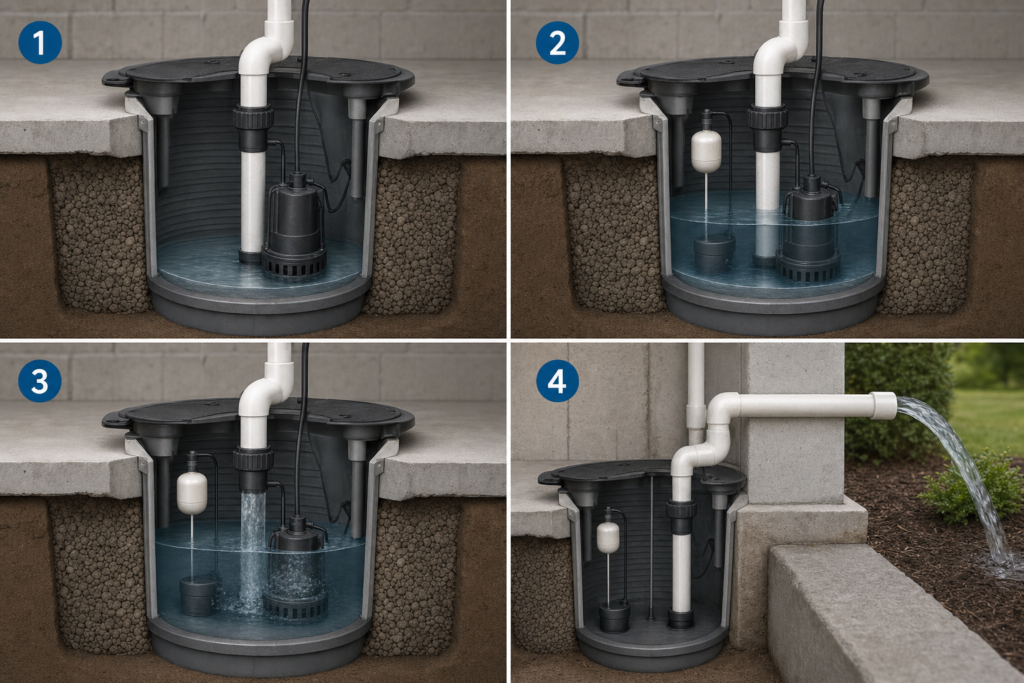
Primary vs. Backup Operation
The system described above is the primary pump, which runs on standard household power. Many systems also include a battery backup or water-powered backup pump that activates only if the primary pump fails or loses power during an outage. Backup systems use the same pit and discharge line but operate independently of the main pump. The distinctions between these setups are covered in Types of Sump Pumps.
Where the Water Goes
The discharge pipe typically exits the house and directs water away from the foundation. The permitted discharge location varies by property and local rules, so it may discharge to an approved outdoor location or other permitted drainage destination. Routing and connection requirements should be confirmed for the property and jurisdiction; see Sump Pump Installation.
For a broader look at pump types, lifespan, and upkeep, see the Complete Guide to Sump Pumps.
Need Sump Pump Service Help?
Call to discuss your situation and confirm service options, pricing, scheduling, availability, and provider capabilities directly.
Referral Disclosure: Sump Pump Co is a referral-style informational website. We may help callers connect with independent service providers. We do not perform sump pump services ourselves. Pricing, availability, response times, warranties, provider capabilities, and service options may vary. Always confirm details directly before scheduling work.