
SUMP PUMP RESOURCE
Sump Pump Replacement (2)
Practical information from Sump Pump Co to help you understand sump pump problems, repair options, water-management considerations, and what to confirm with an independent provider.
Sump pump replacement may be appropriate when the pump fails, shows significant wear, repeatedly performs poorly, or no longer matches the home’s water-handling needs. A basement water event does not automatically mean the pump itself must be replaced—the cause could also involve power, the float switch, check valve, discharge line, drainage, or unusually high inflow. Replacement decisions should start by identifying why the system failed or is underperforming.
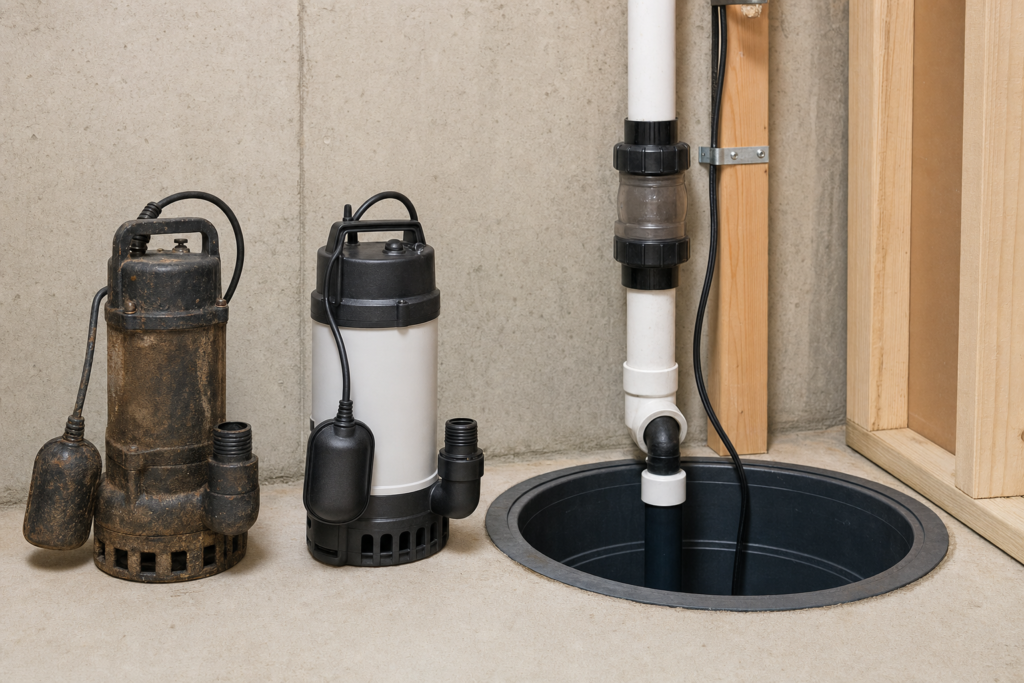
Signs Your Sump Pump Needs Replacing
- It doesn’t turn on during a flood test (pour water into the pit and watch for activation).
- It runs constantly or cycles on and off rapidly, straining the motor.
- Loud grinding, rattling, or humming noises suggest internal wear or a failing motor.
- Visible rust, corrosion, or an aging unit—pumps nearing or past their typical working life are more likely to fail without warning. See How Long Do Sump Pumps Last? for what affects lifespan.
- It has already failed once, particularly during a heavy rain event.
- The pump was undersized or mismatched for the home’s water intake to begin with.
If the pump is relatively new and the issue is a clogged switch, debris in the impeller, or a tripped breaker, a repair or cleaning may resolve it without full replacement.
Repair vs. Replace
Repair or cleaning can make sense when the pump itself is otherwise in good condition and the problem is isolated, such as a float obstruction, discharge blockage, check-valve problem, or power issue. Replacement becomes more reasonable when the pump is near the end of its expected service life, has recurring mechanical problems, is damaged, or no longer provides adequate capacity. Compare the specific repair cost and cause of failure rather than replacing a pump solely because one water event occurred.
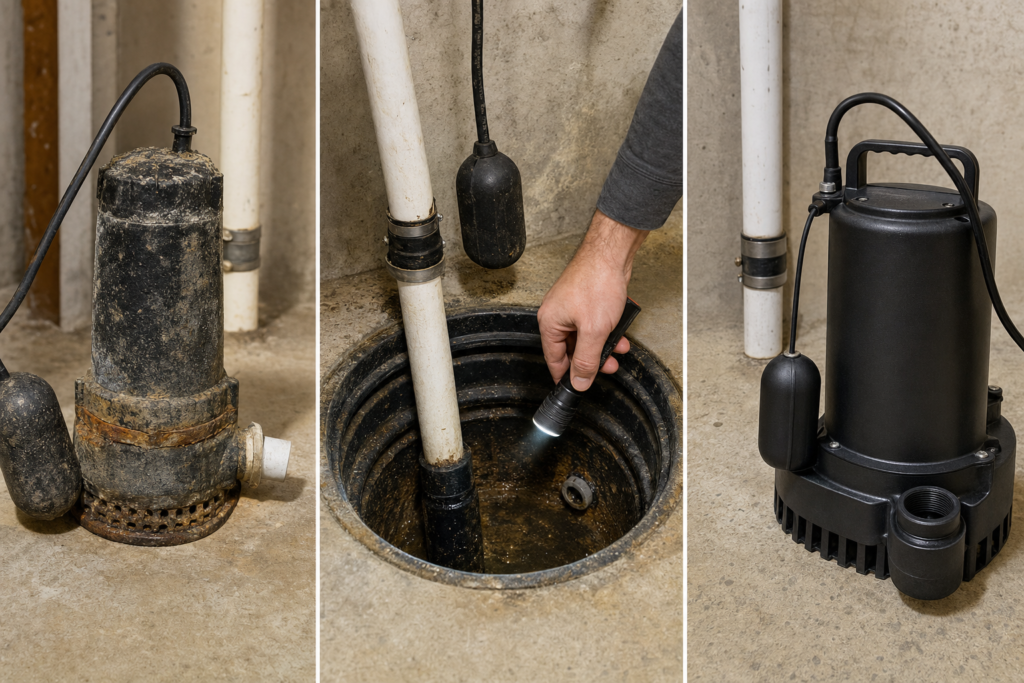
What Replacement Involves
- Disconnecting and removing the old pump from the basin.
- Inspecting the pit, discharge pipe, and check valve for damage, cracks, sediment buildup, or blockages, since these components often outlast the pump itself but should still be checked.
- Selecting a replacement pump sized appropriately for the pit and expected water volume—also a good opportunity to reconsider pump type or add a backup system (see Types of Sump Pumps).
- Installing and securing the new pump, reconnecting the discharge line, and testing it under load.
- Confirming the float switch and any backup or alarm systems function correctly.
Because the pit and discharge line are usually already in place, replacement generally skips the concrete-breaking and drainage-tile work required for a first-time installation. Those steps are covered in Sump Pump Installation if you’re comparing the two processes.
Upgrading During Replacement
Replacement is a useful time to confirm that the new pump is properly matched to the basin, discharge head, and expected water inflow rather than automatically choosing a higher-horsepower model. If outage protection is a concern, it is also a logical time to evaluate a compatible battery or water-powered backup system. See Types of Sump Pumps for the main options.
Should You Replace It Yourself or Hire a Pro?
Replacing a sump pump is more straightforward than a first-time installation if the pit, wiring, and discharge line are already in good condition—it’s often close to a swap-and-connect job. Hiring a professional is worth considering if:
- The discharge line or check valve also needs repair or replacement
- You’re unsure of the correct pump size or horsepower for your pit
- Local code affects the discharge routing or electrical connection
- You want to add a backup pump or battery system at the same time
Extending the Life of Your New Pump
Once installed, routine maintenance—testing the float switch, cleaning the pit, and checking the check valve—helps you get the full expected lifespan out of the new unit. See Sump Pump Maintenance.
For a broader overview of how sump pumps work and fit into your home’s water management, see the Complete Guide to Sump Pumps.
Need Sump Pump Service Help?
Call to discuss your situation and confirm service options, pricing, scheduling, availability, and provider capabilities directly.
Referral Disclosure: Sump Pump Co is a referral-style informational website. We may help callers connect with independent service providers. We do not perform sump pump services ourselves. Pricing, availability, response times, warranties, provider capabilities, and service options may vary. Always confirm details directly before scheduling work.