
SUMP PUMP RESOURCE
Types of Sump Pumps
Practical information from Sump Pump Co to help you understand sump pump problems, repair options, water-management considerations, and what to confirm with an independent provider.
Sump pumps come in two basic pump designs—submersible and pedestal—and can be configured as a primary pump alone or paired with a battery or water-powered backup. Which combination makes sense depends on the pit size, how much water the home needs to move, and how much protection you want during a power outage.
Submersible Pumps
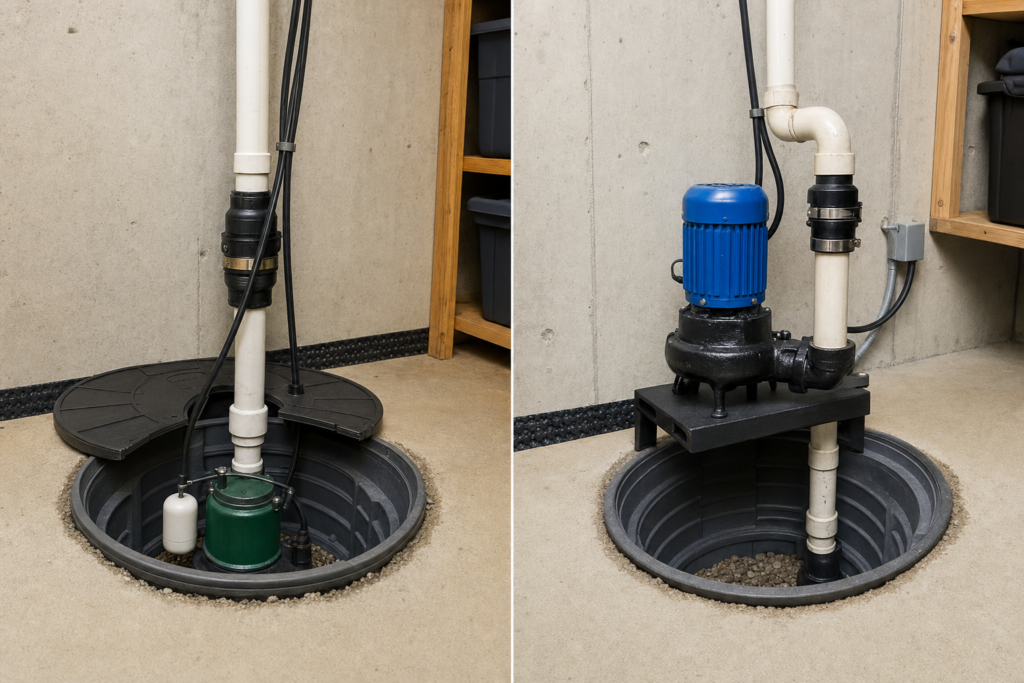
Submersible pumps sit inside the sump pit with a sealed motor designed for submerged operation. Because the unit is below the pit lid, many submersible models operate quietly and keep the equipment contained within the basin. Capacity, durability, serviceability, and noise vary by model, so compare the published performance curve and construction of the specific pump rather than assuming every submersible pump outperforms a pedestal design.
Pedestal Pumps
Pedestal pumps place the motor above the sump pit while the pumping components extend down into the water. The above-pit motor can make inspection and service easier, and pedestal designs can work where basin dimensions favor that layout. Noise, capacity, service life, and fit vary by model; pedestal pumps should be compared using their actual performance specifications rather than treated as inherently lower-capacity or longer-lasting.
Primary Pumps
A primary pump is the main, always-installed pump that runs on standard household electrical power. It’s the pump described in How Do Sump Pumps Work? and handles day-to-day groundwater removal.
Battery Backup Pumps
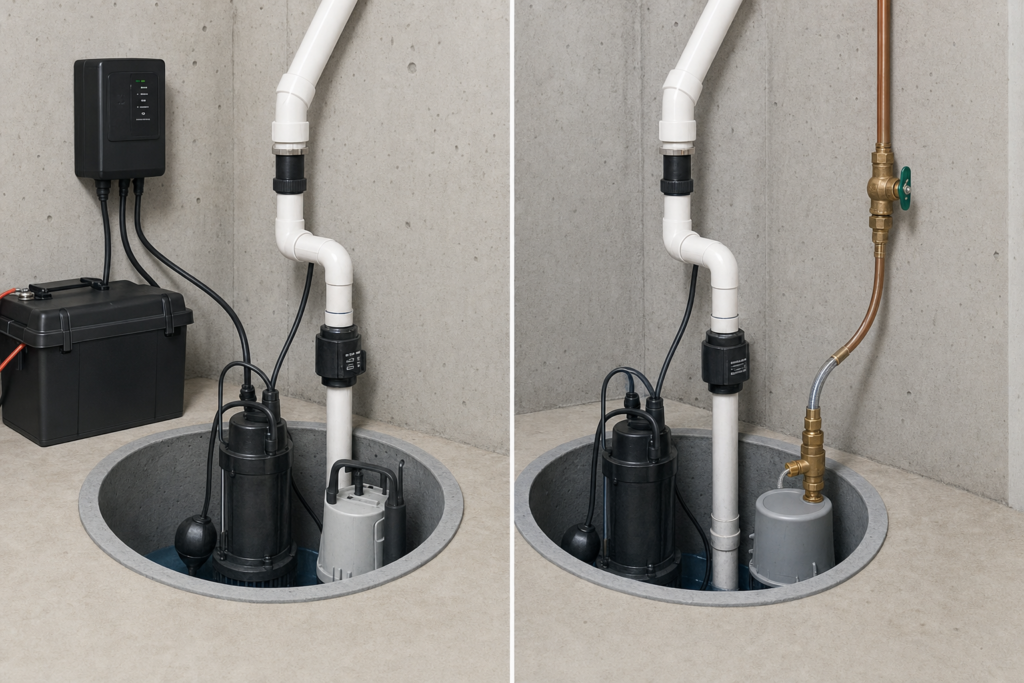
A battery backup is a secondary pump and power system intended to provide pumping when the primary pump cannot operate, such as during certain power outages or primary-pump problems. Runtime and pumping capacity depend on the backup pump, battery, water inflow, discharge head, and system condition, so manufacturer specifications matter when sizing a backup.
Water-Powered Backup Pumps
Water-powered backup pumps use municipal water pressure to help remove sump water without relying on a battery. They require a compatible municipal water supply and adequate pressure, and their installation and permitted use can depend on local plumbing requirements. Water consumption and pumping performance vary by model.
Combination Systems
Many installations pair a primary pump with either a battery backup or water-powered backup so the home retains pump protection during a power outage or a primary pump failure. Whether a combination system makes sense for a given home depends on flood risk, budget, and water supply setup, which is a decision typically made at the time of installation or replacement—see Sump Pump Installation and Sump Pump Replacement.
Choosing Between Types
The right choice generally comes down to three factors:
- Pit size and depth: Narrow or shallow pits may not accommodate a pedestal pump’s base or a submersible pump’s housing equally well.
- Water volume: Homes with higher groundwater intake generally benefit from a submersible pump’s higher pumping capacity.
- Outage protection: Homes in areas prone to power outages during storms benefit from adding a battery or water-powered backup alongside the primary pump.
For an overview of how each type fits into the bigger picture of sump pump ownership, see the Complete Guide to Sump Pumps.
Need Sump Pump Service Help?
Call to discuss your situation and confirm service options, pricing, scheduling, availability, and provider capabilities directly.
Referral Disclosure: Sump Pump Co is a referral-style informational website. We may help callers connect with independent service providers. We do not perform sump pump services ourselves. Pricing, availability, response times, warranties, provider capabilities, and service options may vary. Always confirm details directly before scheduling work.