
SUMP PUMP FAQ
Basement Water & Flooding FAQs
Clear answers to common sump pump questions, with system-specific diagnosis and service decisions left to the provider evaluating the property.
- Clear homeowner guidance
- Symptoms are clues, not diagnoses
- System and property conditions can vary
- Related guides for deeper planning topics
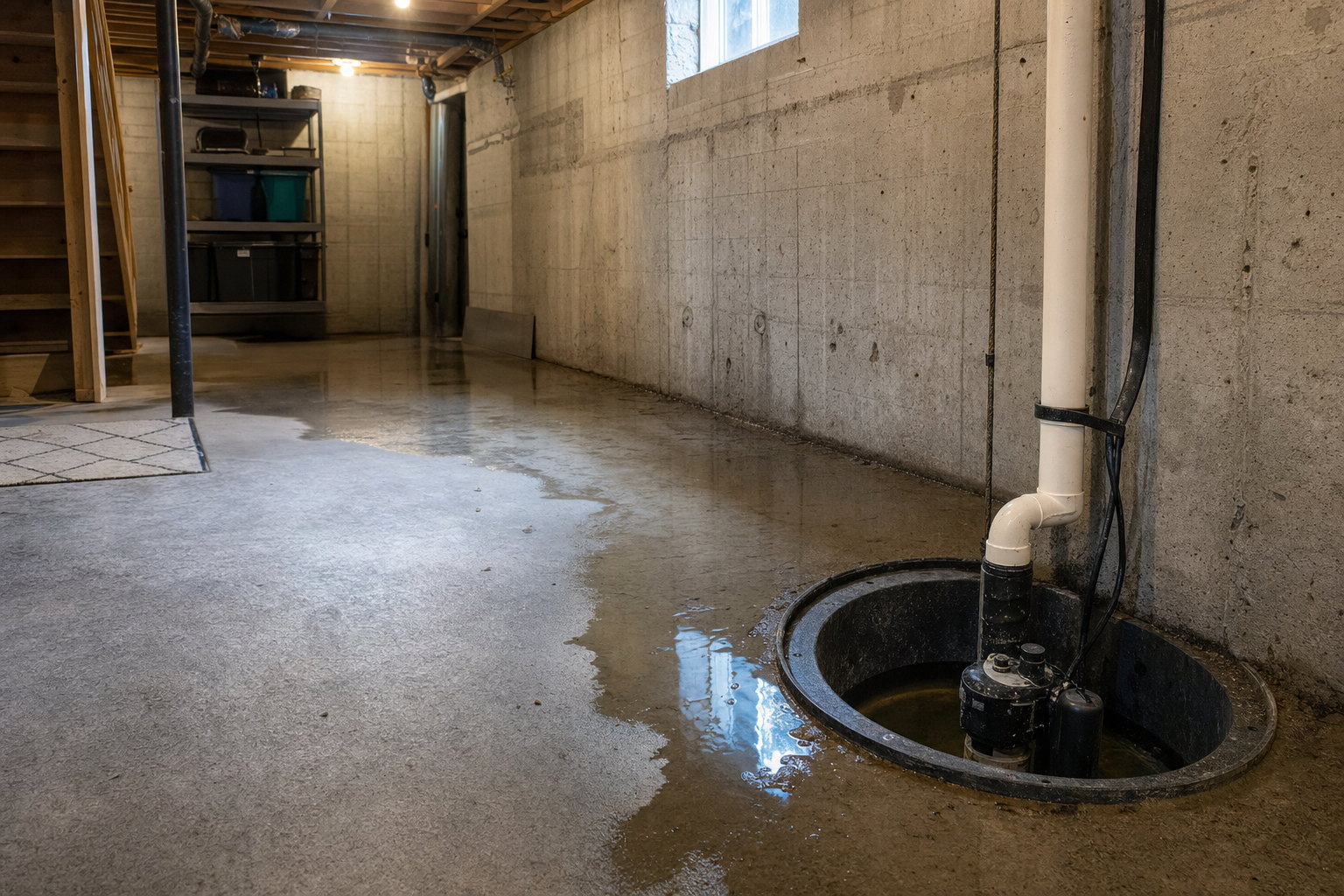
Basement Water & Flooding FAQs
Answers below cover basement water symptoms, how sump pumps relate to flooding, and when a water problem is worth having evaluated. Sump Pump Co is an informational referral resource and does not diagnose or resolve basement water issues directly. Any symptoms described here are clues to raise with a provider, not a diagnosis, and the actual cause depends on your specific property and drainage conditions.
Basement Water Symptoms
What are common signs of a basement water problem?
Damp walls or floors, a musty smell, visible water stains, standing water after rain, or efflorescence (a white, chalky residue on concrete) are all clues worth having evaluated. These can point to different causes, including foundation issues, drainage problems, or sump system limitations.
Does water in the basement always mean the sump pump has failed?
Not necessarily. Water intrusion can come from sources unrelated to the sump system, such as foundation cracks, window wells, or surface drainage issues. If you suspect the pump itself is the problem, see Sump Pump Repair FAQs for pump-specific symptoms.
Is a small amount of dampness normal, or should any moisture be a concern?
This depends on the specific situation and how the moisture behaves over time. Persistent or worsening dampness is worth having evaluated even if it seems minor at first.
Sump-Related Flooding Questions
Can a sump pump prevent all basement flooding?
No — a sump pump is designed to manage a certain amount of water intrusion, but severe storms, pump failure, power outages, or water beyond the system’s capacity can still result in flooding. A provider can advise on whether your current setup is suited to your property’s conditions.
If my sump pump is working, why is my basement still flooding?
This could relate to several things — the volume of water may exceed what the pump can handle, water may be entering through a different path entirely, or there may be an issue with the pump or discharge line. A provider can help narrow down the cause.
Drainage Context
Does grading or landscaping around my home affect basement water issues?
Yes, potentially — how water flows around your foundation, including grading, gutters, and downspout placement, can affect how much water reaches your basement or sump pit. This is a factor worth mentioning to a provider evaluating a water issue.
Is my sump pump connected to my home’s other drainage systems?
This depends on your specific setup. Some systems tie into an interior perimeter drain, while others operate independently. A provider can explain how your system is configured.
Prevention Planning
What can help reduce the risk of future basement water problems?
Possible risk-reduction measures can include addressing surface drainage around the foundation, maintaining the sump system, and evaluating backup protection for power outages. Which measures are appropriate depends on the cause of the water problem and the property. See Sump Pump Maintenance FAQs and Battery Backup Sump Pump FAQs for more on those specific topics.
Should I consider installing a sump pump if I don’t have one?
If you’re experiencing recurring water issues and don’t currently have a system, this is worth discussing with a provider. See Sump Pump Installation FAQs for planning considerations.
When to Have Water Problems Evaluated
At what point should I have a professional look at a basement water issue?
Recurring water intrusion, worsening symptoms, or any signs of structural concern (such as cracking) are reasons to have the situation assessed rather than waiting to see if it resolves on its own.
Is it possible the problem is bigger than just the sump pump?
Yes — foundation, grading, or broader drainage issues can exist independently of or alongside a sump system problem. A provider assessing water intrusion can help determine whether the sump system, the site conditions, or both are contributing.
Related Questions
If you suspect the pump itself is malfunctioning, see Sump Pump Repair FAQs. If you don’t have a sump system and are considering one, see Sump Pump Installation FAQs. For backup protection during power outages, see Battery Backup Sump Pump FAQs.
Next Step
To have a basement water issue evaluated, contact a provider through the site with a description of what you’re noticing, when it happens, and whether you have an existing sump system.
Related Sump Pump Guides
Complete Guide to Sump Pumps
Continue to this focused guide for more information.
Sump Pump Problems Guide
Continue to this focused guide for more information.
Basement Water & Flooding Guide
Continue to this focused guide for more information.
Sump Pump Backup Systems Guide
Continue to this focused guide for more information.
Need Sump Pump Service Help?
Call to discuss service options and confirm availability, scope, pricing, and provider capabilities directly.
Referral Disclosure: Sump Pump Co is a referral-style informational website. We may help callers connect with independent service providers. We do not diagnose, repair, install, replace, or maintain sump pump systems ourselves. Pricing, availability, response times, equipment options, provider capabilities, and service scope may vary. Always confirm details directly before scheduling work.